Built for wide, paddock-facing glass
On a Blue Hills stand, the lounge or kitchen window is rarely small — it’s usually the one that frames the arena or the grazing land beyond the fence line. A roller blind is the simplest way to control what comes through that glass without boxing the view in when you don’t need to. One fabric panel, one aluminium tube, made to measure for the exact opening.
Blockout, sunscreen, or both
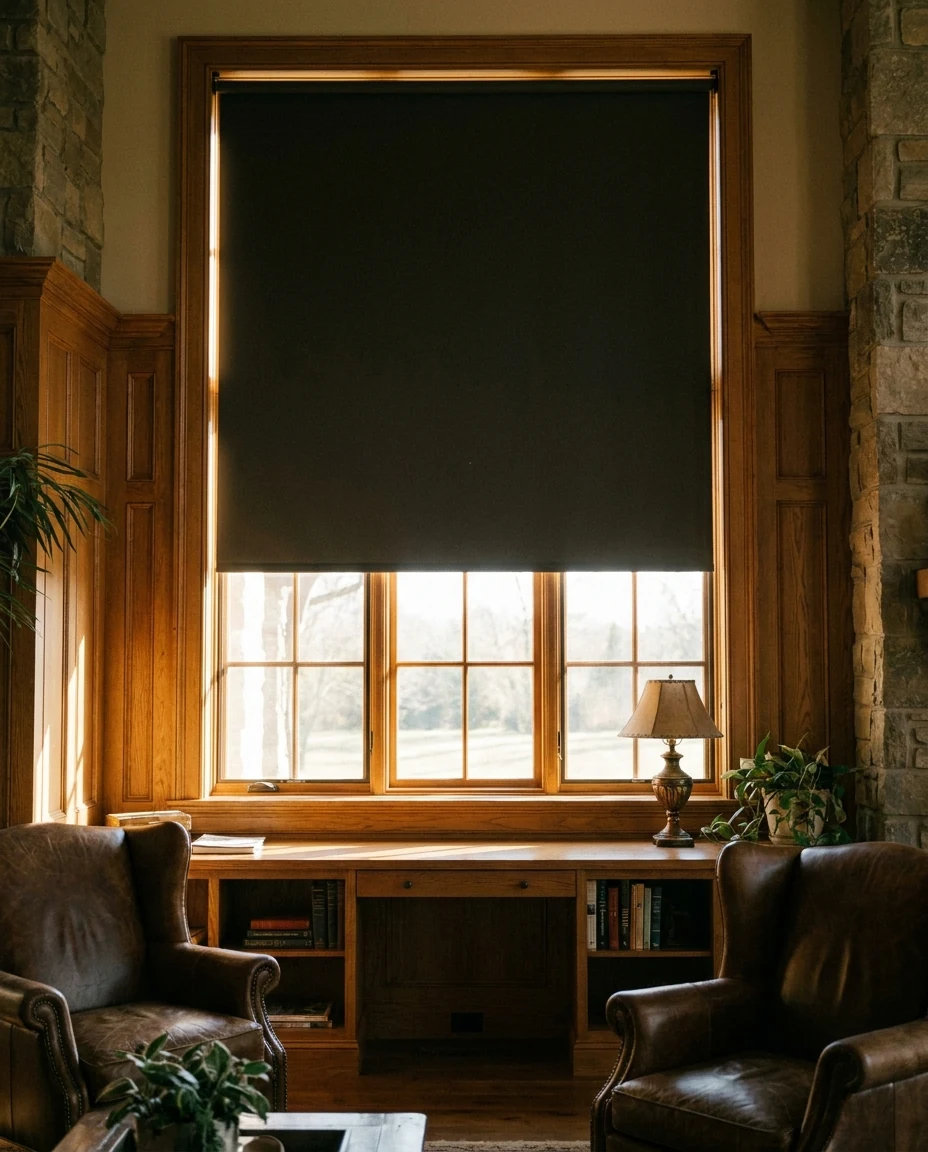
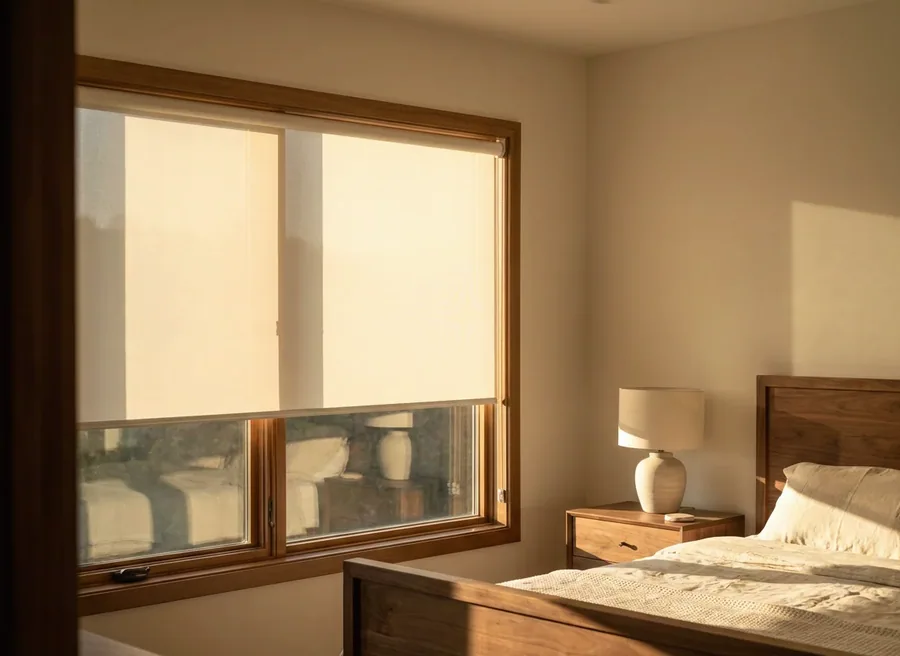
Blockout fabric is the right call for bedrooms, nurseries and media rooms — total light stop, plus a genuine thermal benefit against Highveld summer heat and winter chill. Sunscreen fabric (typically 3%, 5% or 10% openness) cuts glare and UV while keeping the paddock in view; the lower the percentage, the more heat and glare it blocks, at the cost of a little visibility. It is worth knowing honestly that sunscreen gives daytime privacy but reverses after dark — with the lights on inside, you’re visible from the arena side, which is why bedrooms usually want a second layer.
That’s exactly what a double roller (day/night) does — blockout and sunscreen on one bracket, so a bedroom with a paddock view gets both privacy and light control without swapping blinds by hand.
Chain, spring or motorised
Standard chain control comes with a wall-mounted tensioner as standard practice — the loop stays anchored and taut, which is the responsible way to run a corded blind in a house with children or pets around. For wide spans, windows above stair voids, or simply a run of glass that’s a stretch to reach from the floor, motorised is the practical option — and it pairs with a sun sensor so the blind responds to the Highveld sun without anyone touching a switch. A single blind runs to roughly 3m of fabric width comfortably; beyond that we either split the run with a central join line or motorise linked blinds to move together.
Where they don’t suit
A very wide, unbroken span will show a join line eventually — better handled with an honest conversation up front than a surprise at fitting. And in a more heritage-styled room, a timber venetian often reads better than a roller. We’ll say so at the free measure if that’s the case for your room.