The physics, simply put
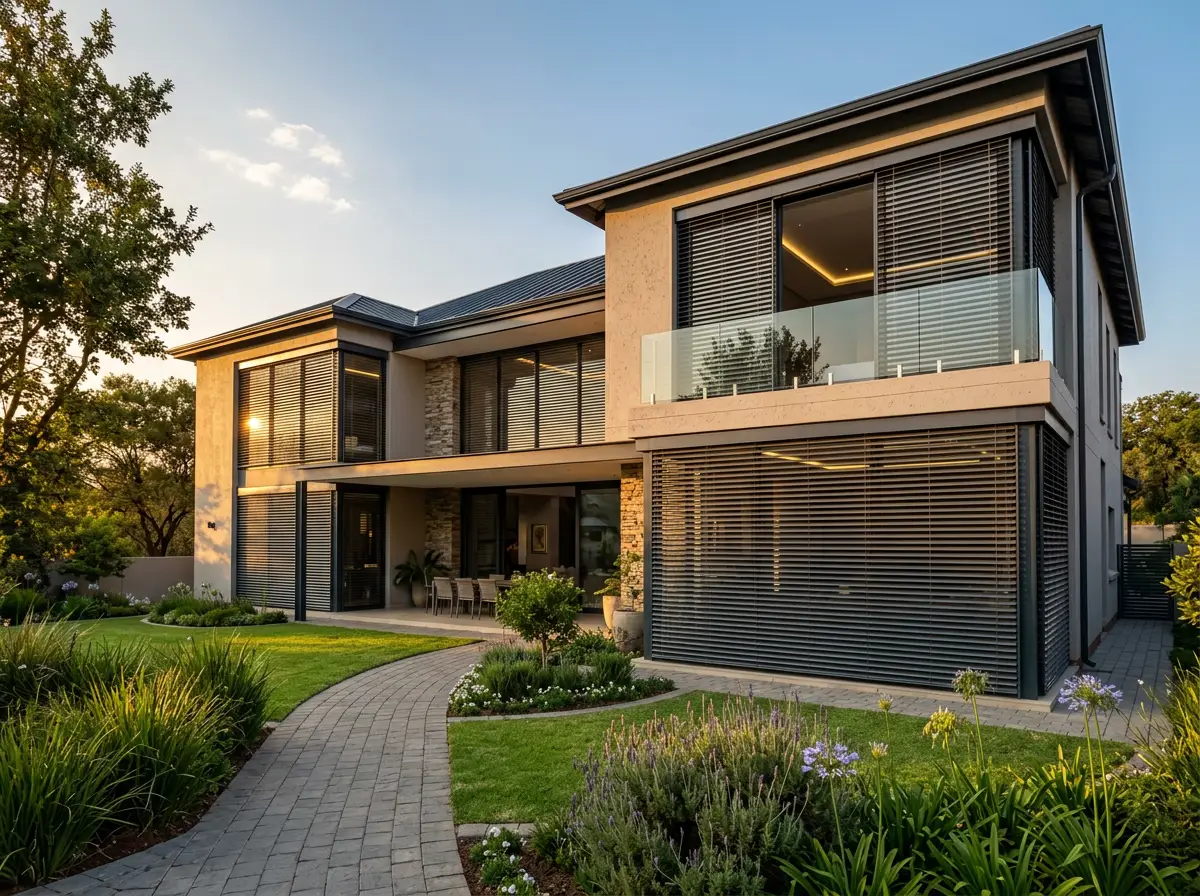
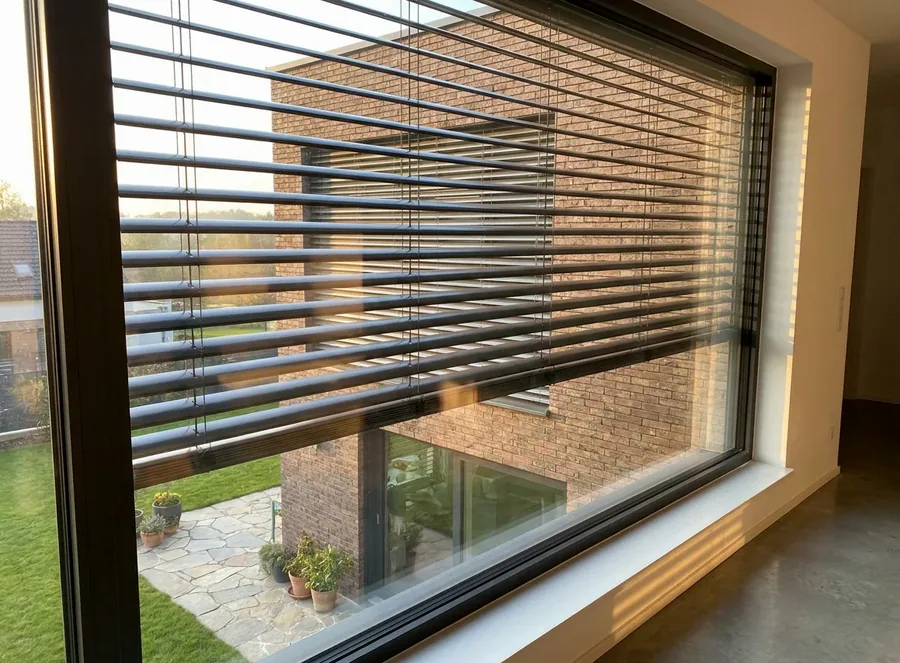
An interior blind manages heat that has already made it into the room. An external venetian stops most of it outside, at the glass itself. On a Blue Hills home with a big north-facing living wall or a west-facing study catching the afternoon sun over the paddocks, the difference in indoor temperature is dramatic — it’s the same principle European and high-end local architects use to shade glass buildings.
What it actually is
Wide aluminium slats — typically in the 60–90mm class — run in guided side rails or cables, tilting and raising the same way an interior venetian does, just built for the outdoors. Finishes are powder-coated and engineered for weather exposure, which matters on an exposed elevation that gets full Highveld sun and the odd dust storm off open veld.
Effectively always motorised
An external blind lives outside, so it has to protect itself. Every install is effectively motorised, paired with a wind sensor that retracts the blind automatically the moment gusts pick up — the same logic that matters for awnings before an October storm front rolls through. It is not a system you want caught open in a highveld thunderstorm gust.
Worth planning for
This is a premium spend and a visible change to the facade, so if your estate runs an architectural or aesthetics committee, we build the submission pack around their colour and fascia rules before anything is ordered. It suits new-build planning best, though a considered retrofit is possible on the right elevation — we’ll tell you honestly if your facade isn’t a good candidate.